


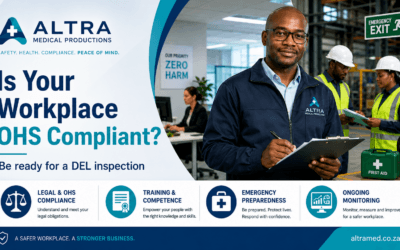
A Department of Employment and Labour safety inspection should not be treated as an event you prepare for only after the inspector arrives. The best preparation is to maintain a working occupational health and safety system every day, with current documents, trained employees, completed inspections and evidence that hazards are being corrected.
Direct answer: To prepare for a Department of Employment and Labour safety inspection, make sure your OHS appointments, risk assessments, training records, first-aid arrangements, inspections, incident records and workplace controls are current and actually implemented. Inspectors may enter a workplace without prior notice, ask for documents, question employees and inspect machinery, equipment and conditions.
Why businesses get caught out during inspections
Most inspection problems are not caused by one missing document.
They happen because the paperwork, the workplace and the actual way employees work do not match.
A company may have a risk assessment saying that machine guards must be fitted, but the guard is missing. It may have appointment letters for first aiders whose certificates expired months ago. It may have an emergency plan but employees do not know where the assembly point is.
That is why the most effective preparation is to compare the OHS file with the actual workplace before an inspector does.
1. Can a labour inspector arrive without an appointment?
Yes. Section 29 of the Occupational Health and Safety Act allows an inspector, at reasonable times and without previous notice, to enter premises used by an employer or where employees work, plant or machinery is used, or where the inspector suspects that such activities take place.
This means a business should not rely on receiving a warning before an inspection.
An inspector may also question people, require documents to be produced, examine those documents and inspect workplace conditions, articles, substances, plant or machinery.
Your inspection preparation should be permanent, not temporary. If the system only becomes compliant after somebody hears that the Department is visiting, it is not an effective OHS system.
2. Why might your workplace be inspected?
Department inspections can be routine or proactive, but inspections and investigations may also follow:
- A workplace complaint;
- A serious incident;
- An occupational injury;
- Dangerous machinery concerns;
- Hazardous substance exposure;
- A sector inspection campaign;
- A previous contravention; or
- Follow-up on an earlier notice.
Complaints from workers or members of the public may trigger unplanned inspections, and the Department states that such complaints are treated confidentially.
3. What can an inspector ask to see?
Section 29 gives inspectors broad powers to require books, records and other documents relevant to the OHS Act.
There is therefore no single universal “inspection file” that guarantees compliance for every business.
The documents that matter depend on the work performed and the regulations that apply.
However, common areas include:
- OHS legal appointments;
- Health and safety representative records;
- Health and safety committee records;
- Risk assessments;
- Training and competency records;
- First-aid appointments and certificates;
- Incident records and investigations;
- Plant and equipment inspections;
- PPE records;
- Emergency procedures;
- Contractor documentation;
- Medical fitness records where applicable;
- Hazardous chemical agent documentation where applicable; and
- Corrective-action and audit records.
The Department also publishes general inspection guidance that includes checks such as Compensation Fund registration, UIF registration, availability of the OHS Act and applicable regulations, health and safety representatives, committees and employee awareness of health and safety problems.
4. Start with the actual workplace, not the file
Before reviewing paperwork, walk through the workplace as if you were the inspector.
Look at what is immediately visible:
- Are emergency exits open and accessible?
- Are fire extinguishers and emergency equipment accessible?
- Are machine guards fitted?
- Are electrical panels closed and unobstructed?
- Are aisles and walkways clear?
- Is damaged equipment still being used?
- Are employees wearing the required PPE?
- Are chemicals labelled and stored correctly?
- Are ladders and access equipment in safe condition?
- Are unsafe temporary repairs visible?
If a major hazard is obvious during a five-minute walk-through, fixing the filing system first is the wrong priority.
5. Check your risk assessments
Your risk assessments should reflect the work that employees are actually performing.
A common inspection failure is a generic risk assessment that was copied from another company or created years ago and never updated.
Ask:
Does this document describe our real hazards, our real equipment and our real work methods?
If new machinery, chemicals, work processes or contractors have been introduced, the assessment may need review.
Related article: What Is a HIRA? Risk Assessment Under OHSA Explained
6. Verify your legal appointments
Appointment letters are often filed once and forgotten.
Before an inspection, confirm that every appointment still reflects reality.
Check whether the person:
- Still works for the company;
- Still works in that department;
- Understands the role;
- Has the required competence;
- Has received appropriate training; and
- Is actually performing the duties.
An appointment for an employee who resigned a year ago is not useful evidence of compliance.
7. Review health and safety representatives and committees
Where the employee thresholds are met, ensure the required health and safety representatives have been properly designated and are functioning.
If two or more representatives have been designated at a workplace, the employer must establish at least one health and safety committee.
Do not stop at appointment letters. Check whether inspections and meetings are actually happening and whether findings are being followed up.
Related article: Who May Be Appointed as a Health and Safety Representative?
8. Check training and competence
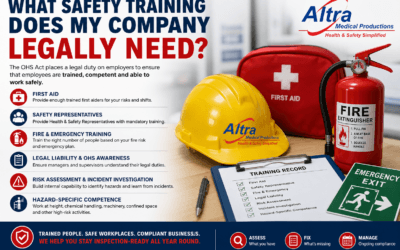
Training records should match the hazards and legal duties in the workplace.
Examples may include:
- First aid;
- Safety representative training;
- Fire and emergency training;
- Risk assessment;
- Incident investigation;
- Working at height;
- Equipment-specific competence; and
- Other training required by the applicable regulations.
Check expiry dates and make sure trained employees are still available on the relevant shifts.
9. Check first-aid arrangements
Do not assume a stocked first aid box is enough.
Where the trained-first-aider requirement applies, the employer must make sure appropriately trained people are readily available during working hours.
If the company works shifts, confirm that the required coverage exists on night shifts, overtime and weekends as well as during normal office hours.
Related article: Does Every Shift Need Its Own Trained First Aider?
10. Review plant and equipment records
The inspector may inspect machinery, equipment and workplace conditions directly.
Records should therefore support what is visible on site.
Depending on the workplace, check:
- Pre-use inspection records;
- Maintenance records;
- Statutory examination certificates;
- Machine guarding;
- Electrical safety;
- Lifting equipment documentation;
- Ladder registers;
- Pressure equipment records; and
- Any other inspections required by the regulations applicable to your equipment.
11. Review incident reporting and investigations
If incidents have occurred, make sure the records tell a complete story.
An incident investigation should not end with “employee was careless”.
It should identify what happened, why it happened, what controls failed and what was changed to prevent recurrence.
The inspector may also investigate serious incidents independently and may request supporting records.
12. Check your contractors
Contractors create a common blind spot.
Management may assume that because a contractor is an independent business, the contractor is solely responsible for health and safety.
That assumption is dangerous.
Depending on the work, ensure that contractor competence, appointments, risk assessments, safety plans, training, equipment and monitoring arrangements are in place.
Related article: Does Every Subcontractor Need a Separate Safety File?
13. Make sure employees know the basics
An inspector may question employees directly.
This is where a paper-only system becomes obvious.
Employees should know practical information such as:
- Who their supervisor is;
- Who the safety representative is;
- Who the first aider is;
- How to report a hazard;
- What PPE is required;
- What to do in an emergency;
- Where the assembly point is; and
- What safe-work procedure applies to their task.
Employees do not need to memorise legislation, but they should understand how the safety system works around them.
14. What should happen when the inspector arrives?
Stay professional and cooperative.
Confirm the inspector’s identity if necessary. Inspectors designated under the OHS Act are issued with certificates and must produce the certificate on demand when performing a function in the presence of an affected person.
The person who manages OHS documentation should be available where possible, but management should not try to prevent the inspector from speaking to employees.
Keep notes of:
- Documents requested;
- Areas inspected;
- Questions raised;
- Hazards identified;
- Instructions given; and
- Any notices issued.
15. What enforcement action can follow an inspection?
If serious or adverse conditions are found, inspectors have enforcement powers.
Department guidance describes three common types of notices:
| Notice | What it generally means |
|---|---|
| Prohibition notice | A dangerous action, process, machine, equipment item or area may be prohibited where there is threatening danger. |
| Contravention notice | A contravention is identified and the employer may be required to correct it within a specified period, depending on the legal provision involved. |
| Direction notice | The inspector requires more effective health and safety measures where the existing measures do not adequately protect employees. |
A prohibition should be treated as an immediate operational issue, not as an administrative document to file for later.
16. What should you do after the inspection?
Do not wait until the due date on a notice before taking action.
Management should review every finding, assign responsibility, agree on immediate controls and track each item to closure.
If a finding reveals a wider system problem, correct the system rather than fixing only the single example the inspector saw.
For example, if one ladder has no inspection record, check every ladder. If one employee’s certificate has expired, review the full training matrix.
17. The most common preparation mistake
The biggest mistake is trying to build an impressive OHS file instead of building a compliant workplace.
A neat file can help an inspection run smoothly, but the inspector has the power to walk through the workplace, inspect machinery, question employees and compare those observations with the records.
The file and the workplace must tell the same story.
A good OHS file is evidence of a working safety system. It is not a substitute for one.
18. A simple pre-inspection review
Before an inspection, management should be able to answer these questions confidently:
- What are our highest workplace risks?
- Who is responsible for controlling them?
- Are our legal appointments current?
- Are employees competent for the work they perform?
- Are our inspections actually being completed?
- Are serious findings being closed?
- Do our employees understand emergency arrangements?
- Are contractors being controlled?
- Can we produce the records that support our answers?
Frequently asked questions
Can a Department of Employment and Labour inspector arrive without notice?
Yes. Section 29 of the OHS Act allows an inspector to enter relevant workplace premises at reasonable times without previous notice.
Can the inspector ask employees questions?
Yes. Inspectors may question people on matters relating to the OHS Act and may in certain circumstances question them alone or in the presence of others.
Can an inspector ask for safety documents?
Yes. An inspector may require books, records and other documents relevant to the OHS Act to be produced, examine them and make copies or extracts.
Can an inspector inspect machinery?
Yes. Inspectors may inspect plant, machinery, articles, substances, workplace conditions and work being performed.
What happens if a serious danger is found?
An inspector may issue enforcement action, including a prohibition affecting dangerous work, equipment, processes or areas.
Should we create a safety file before an inspection?
You should maintain appropriate OHS records continuously. Creating paperwork at the last minute will not solve unsafe workplace conditions, expired training or missing inspections.
Can an OHS consultant help us prepare?
Yes. A competent consultant can conduct a compliance review, identify documentation and workplace gaps, update risk assessments and help management prioritise corrective actions before an inspection.
Would your workplace be ready if an inspector arrived today?
Altra Medical Productions assists businesses with OHS legal compliance audits, risk assessments, appointments, training, contractor control and the development and maintenance of practical health and safety systems.
We can review both your documentation and the actual workplace, identify gaps and help you prioritise corrective actions before they become inspection findings.
Related articles and services
- Legal Compliance Audits
- What Is a HIRA? Risk Assessment Under OHSA Explained
- Who May Be Appointed as a Health and Safety Representative?
- Does Every Shift Need Its Own Trained First Aider?
- Does Every Subcontractor Need a Separate Safety File?
- Health and Safety Courses
Legal references
- Occupational Health and Safety Act 85 of 1993 — particularly Sections 28, 29 and 30
- Applicable regulations issued under the Occupational Health and Safety Act
This article provides general information and is not a substitute for a workplace-specific legal compliance assessment. The documents and controls an inspector may require depend on the activities, hazards, equipment and regulations applicable to the workplace.

0 Comments