

SANS 10139 – Fire detection systems
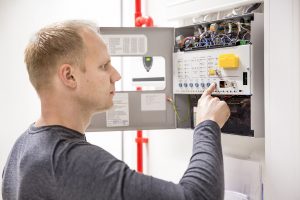
SANS 10139 provides guidelines for the design, installation, commissioning, and maintenance of fire detection and alarm systems. It also includes information about the roles and responsibilities of various parties involved in the system’s lifecycle.
Weekly test by the user
- Inspect the entire system for obvious damage and obstructions.
- Every week a manual call point should be activated during normal working hours. Confirm the alarm signal is activated and clearly received at all points in the building.
- Confirm the alarm signals are received at the alarm receiving center if applicable.
- A different manual call point should be used at every weekly test, so that all the manual call points in the building are tested in rotation over a prolonged period.
- The result of the weekly test should be recorded in the logbook.
Monthly actions by the user
Ensure all operators are adequately trained and informed of the procedures in case of an activation.
Inspection of the entire system to confirm:
- Manual call point remains unobstructed.
- No storage is closer than 300mm to the ceiling.
- A clear space of 500mm is maintained below all detectors.
Annually by a competent person
Service by a SAQCC registered person include:
- Inspection and review of the log book to confirm all reported issues have been addressed.
- Functional test manual call points, detectors and sounder.
- Functional test of all outputs to third party devices.
- Inspection and testing of power supply.
- Inspection, testing of batteries.
- Simulation of mains fault, open circuit and short circuit.
- Inspection of the entire system to confirm:
- Manual call point remains unobstructed.
- No storage is closer than 300mm to the ceiling.
- A clear space of 500mm is maintained below all detectors.
- Any changes to the occupancy or alterations to the building which made the system ineffective is identified and addressed.
Contact us now for a free quote

0 Comments